
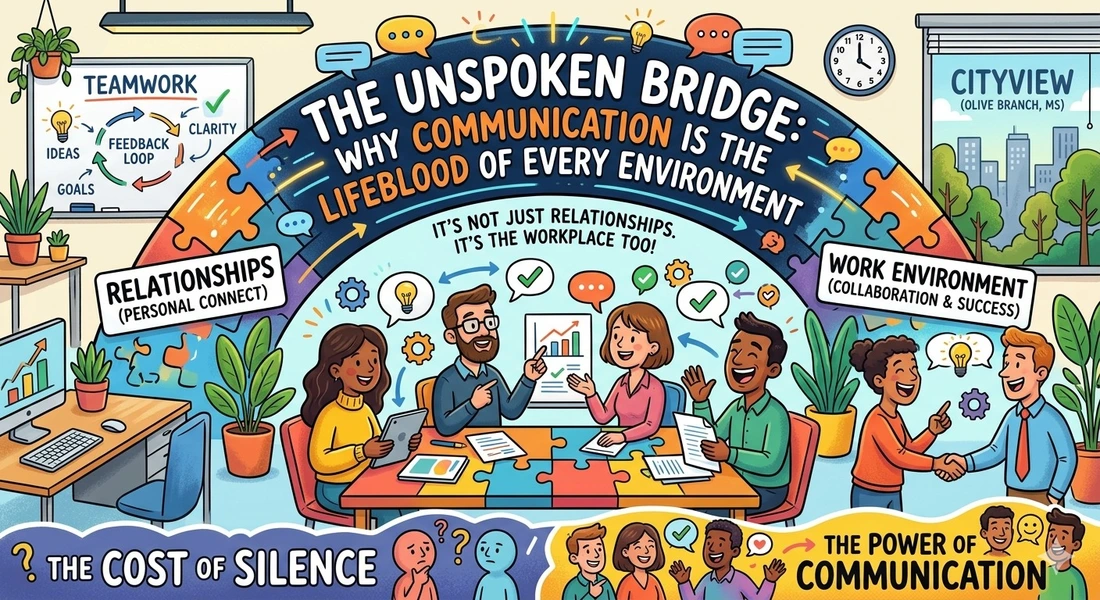
We often hear that "communication is key" in the context of romantic relationships or friendships. We focus on active listening and "I" statements to navigate personal conflicts. However, communication isn’t a soft skill reserved for the dinner table; it is the structural integrity of the workplace.
Whether you are navigating a fast-paced sales floor or managing a project from a desk, the ability to exchange information clearly is what separates a high-performing team from a chaotic one.
1. Beyond "Talking": What Workplace Communication Really Is
In a professional setting, communication isn't just about being social. It’s about the transfer of intent. When communication fails, it’s usually because the intent of the message was lost between the sender and the receiver.
-
Clarity over Complexity: High-level jargon often masks a lack of direction. True pros can explain a complex mechanical process or a financial contract in a way a five-year-old (or a first-time customer) could understand.
-
The Feedback Loop: Communication in the workplace must be a two-way street. If a manager gives instructions but doesn't create a space for questions, they aren't communicating—they’re just broadcasting.
2. The Cost of Silence
In a relationship, silence can lead to a breakup. In a business, "siloed" communication—where departments or individuals stop sharing info—leads to:
-
Wasted Time: Two people working on the same task because neither knew the other had started.
-
The "Telephone" Effect: Instructions passing through three people until the final result looks nothing like the original request.
-
Lower Morale: Employees who feel "out of the loop" rarely feel motivated to go the extra mile.
3. Adapting to the Audience
One of the biggest mistakes people make is using the same "frequency" for everyone.
-
With Clients: Use empathy and relatable language. They want to feel heard and understood, not sold to.
-
With Colleagues: Use precision and brevity. They need the facts to get their own jobs done.
-
With Leadership: Focus on results and solutions.
4. Communication in the Digital Age
For many, the "workplace" is now a mix of emails, Slack messages, and quick huddles. Tone is notoriously difficult to read in a text or email. A short, one-word answer might seem efficient to the sender but "short" or "angry" to the receiver.
Pro-Tip: If a digital thread goes back and forth more than three times without a resolution, pick up the phone or walk over to their desk. Five minutes of verbal clarity can save five hours of digital confusion.
Final Thought
Strong communication builds trust. In a relationship, trust creates intimacy; in a career, trust creates authority and reliability. When you become the person who communicates clearly, stays transparent about mistakes, and asks the right questions, you become an indispensable asset to any team.
How do you usually handle it when you feel like there's a "missed connection" or a misunderstanding with a coworker?